
The Genius Behind Iconic Slogans (and What You Can Learn)
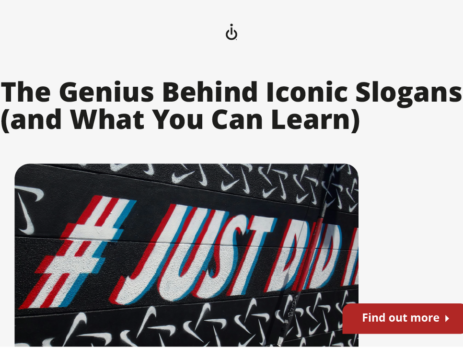
Some words do more than describe; they define eras, reframe categories, and move markets. The right slogan can become a cultural shortcut to a brand’s promise, carrying meaning across decades and languages in just a few syllables. Think of how “Just Do It” activated a mindset, or how “Think Different” turned a product choice into a statement of identity. This article reveals the craft behind such lines and shows you how to apply the same principles without a Super Bowl budget.
Iconic slogans work because they sit at the intersection of psychology, strategy, and style. They trigger memory through rhythm and repetition, they crystallize a differentiating benefit in simple language, and they align tone with audience aspiration. Great lines emerge from disciplined thinking rather than happy accidents; behind every famous phrase lies a rigorous brief, an iterative creative process, and smart testing.
Yet many teams chase cleverness at the expense of clarity, or they default to generic statements no brand can own. The antidote is a methodical approach: define the job your slogan must do, map it to a core benefit, explore language patterns that aid recall, and screen for legal and cultural fit. With that structure, creative sparks have a place to catch.
You’ll learn to decode why classic slogans endure, craft your own step by step, avoid the pitfalls that sink otherwise good ideas, and measure when a line is helping—or when it’s time to refresh. Along the way, you’ll see how memory effects, sound devices, and distinctive brand assets work together to turn a few words into a long-term growth lever.
Use this as a working playbook. Each section builds to the next: understanding what makes slogans iconic, a practical creation method, tactics for challengers, a fix-it guide for common mistakes, and measurement techniques to prove impact. By the end, you’ll have a repeatable system for writing words that sell.
- What makes an iconic slogan successful?
- How do you craft a memorable and ownable slogan step by step?
- How can small brands create slogans that compete with giants?
- What common mistakes ruin slogans, and how do you fix them?
- How do you measure whether a slogan is working and when to refresh it?

What makes an iconic slogan successful?
Iconic slogans succeed because they make a brand’s value instantly graspable and effortlessly memorable. They compress strategy into poetry—bridging what the brand offers, what the audience wants, and how the line sounds when spoken. If your slogan doesn’t clarify value and stick in memory, it won’t move behavior.
Clarity beats cleverness. “The Ultimate Driving Machine” succeeds not because it’s witty, but because it names a specific promise with authority. Meanwhile, “Open Happiness” worked for a time because it threaded emotion to product usage. The best lines balance an explicit benefit with an implicit feeling, so the head and heart agree.
Distinctiveness is non-negotiable. Generic claims like “Quality You Can Trust” could belong to anyone; iconic slogans sound like only one brand could say them. That uniqueness is what turns a line into a distinctive asset—something you can build and protect over years.
Memorability relies on cognitive cues: brevity, rhythm, rhyme, alliteration, and contrast. The Von Restorff effect (we remember what stands out) suggests that a surprising word, structure, or juxtaposition increases recall—so long as it still maps to the core benefit. See more on the effect here: Von Restorff effect.
Emotion does heavy lifting, especially when tied to identity. A line that lets people feel a certain way about themselves (“Because You’re Worth It”) recruits self-concept and social signaling. For a deeper look at how brains encode brand meaning, explore this take on neuroscience and branding.
Portability matters. An iconic slogan should travel across touchpoints—packaging, pre-roll, OOH, product UI—without losing meaning. It should also withstand time, holding steady as product lines and campaigns evolve. For background on how slogans function across contexts, see the overview at Wikipedia: Slogan.
Below is a quick map from creative properties to the cognitive mechanism they tap and the commercial “why.” Use it to stress test candidates before you fall in love with a turn of phrase.
| Property | Cognitive principle | Why it sells | Illustration |
| Brevity (3–6 words) | Working-memory limits | Easy recall and repetition | “Got Milk?” |
| Rhythm/rhyme | Phonological loop | Earworm effect boosts word-of-mouth | “Melts in your mouth, not in your hands” |
| Benefit clarity | Processing fluency | Immediate value comprehension | “The Ultimate Driving Machine” |
| Identity appeal | Self-signaling | Emotional resonance and loyalty | “Think Different” |
| Distinctive wording | Von Restorff effect | Standout in cluttered markets | Unexpected word choice or structure |
Useful creative devices include imperative verbs (“Do”), juxtaposition (“Different”), or provocative questions (“Got…?”). Each device should earn its keep by clarifying or amplifying value, not just adding sparkle.
Watch for category clichés. If your industry leans on “smart,” “future,” or “quality,” avoid them—or subvert them—so your line doesn’t disappear into the noise. A single unexpected word often separates the memorable from the forgettable.
Finally, remember that slogans don’t work alone. They ride along with logos, colors, sonic cues, and product experience. The strongest lines are reinforced by consistent delivery, turning words into a habit customers can’t help but repeat.
How do you craft a memorable and ownable slogan step by step?
Start by deciding what job the slogan must do: drive immediate response, build long-term brand meaning, or both. A response-driven line leans concrete and benefit-forward; a brand-led line may lean more aspirational. Clarity on the job informs tone, length, and where the line will live.
Define the strategic core: target segment, competitive frame, and the single most important benefit. If you can’t articulate the benefit in a plain sentence, you’re not ready to write the slogan. Your line should be the tip of this strategic spear, not a replacement for it.
Map the desired journey. If the line appears at the top of the funnel, it should spark Attention and Interest; mid-funnel lines may aim to build Desire or nudge Action. The classic AIDA model is a simple calibration tool: AIDA (marketing).
Translate the benefit into promise statements. Draft 10–20 short candidate statements that say the same thing in different ways. Use structures like “Own the [benefit],” “The [superlative] [category],” or a crisp imperative that invites action.
Generate language at volume. Explore verbs, unexpected metaphors, alliteration sets, and rhythm patterns. Diverge first, judge later. For more productive ideation in less time, try these 10 brainstorming rules to keep sessions focused and generative.
Screen for ownability early. Search engines, social handles, and trademark databases can surface conflicts fast. The USPTO’s FAQs are a good primer on what can be protected: USPTO Trademark FAQs.
Stress-test voice and channel fit. Read your top candidates aloud. Put them in a mock billboard, a product screen, a 6-second bumper, and an email subject line. Great slogans survive context switches without losing their punch.
Run a lightweight test. Use a simple forced-choice survey with your target audience, plus a 24-hour delayed recall check. Pair this with a small A/B where feasible (e.g., paid social dark posts) to see click and save behavior alongside stated preference.
Score candidates against standardized criteria to avoid personal taste wars. The table below offers a simple scoring grid you can copy into a worksheet for your team.
| Criterion | Question | Score (1–5) |
| Benefit clarity | Is the value obvious without context? | |
| Distinctiveness | Could only our brand say this? | |
| Memorability | Does rhythm/wording aid recall? | |
| Ownability | Is it legally and digitally available? | |
| Flexibility | Does it travel across channels/time? |
Decide, then commit. Once chosen, socialize the rationale and usage guidance: when to pair with a tagline, how to use in copy, and when not to use it. Consistent, disciplined use turns a good line into an asset that compounds over years.
How can small brands create slogans that compete with giants?
Challenger brands win with focus. While giants chase broad appeal, you can choose a sharp promise for a specific audience and say it in a way that only you would. The goal isn’t to be universally liked; it’s to be unmistakable to the people who matter most.
Keep it brutally simple. The KISS principle—“Keep It Simple, Stupid”—exists for a reason: fewer words, stronger punch. A five-word line you can print big on a box or a van will do more for you than a clever paragraph. Read more on the idea here: KISS principle.
Exploit specificity. Name the exact pain you solve or the exact joy you deliver. “Coffee That Doesn’t Jitter” for a low-caf brand hits harder than “Better Coffee.” Precision signals that you understand the customer better than big, vague competitors do.
Adopt a posture. Underdog charm, rebellious wit, or earnest clarity—pick a stance and let it color your language. A distinctive attitude helps your line carry meaning even before the audience processes the words.
Design for spread. Short, punchy, and fun to say beats polite and forgettable. Lines that beg to be repeated out loud are likelier to travel across group chats, captions, and reviews without paid support.
Move fast with sprint-style creation. In a week: Day 1 insight harvest, Day 2–3 language sprints, Day 4 screens and street tests, Day 5 decision. Small brands can turn around sharper lines in days while big brands circulate decks.
Let channels shape choices. If retail end-caps and delivery vehicles are your main media, pick a line that is legible from 10 feet away. If your world is TikTok hooks and short emails, write for spoken cadence and scannability.
Leverage familiarity over time. The mere-exposure effect shows that repeated, consistent exposure increases liking—even for neutral stimuli. Resist the urge to change lines too often; make your words a drumbeat. More on the effect: Mere-exposure effect.
Engineer talkability into the whole experience. Pair your line with packaging moments, support scripts, and CTA microcopy that echo it. For deeper tactics on sparking organic amplification, see this guide to word-of-mouth sales.
Finally, prove it in the product. A slogan that promises a real, felt difference will compound through reviews and referrals. Let the experience deliver the exclamation mark your words set up.
What common mistakes ruin slogans, and how do you fix them?
The most common failure is vagueness. Lines like “Exceeding Expectations” or “Innovation for All” sound fine but mean nothing specific. Fix this by anchoring to a tangible benefit or outcome: “Launch Faster,” “Sleep Through the Night,” “Zero-Hassle Returns.”
Generic phrasing is next. If any brand in your category could own your line, no brand will. Push toward a unique selling proposition—something only you can credibly promise or at least say in a way only you would. Background here: Unique selling proposition.
Too long, too complex sinks recall. Aim for 3–6 words where possible, cap at 8–10 if you must. Read aloud and trim syllables until it sounds like breath, not a sentence. Shorter lines live better on packaging, thumbnails, and small screens.
Ambiguity and accidental double meanings can backfire. Read candidates to people outside your industry and in different regions. If more than 10% interpret the line in an unintended way, rewrite it.
Off-brand tone breaks trust. If your brand is warm and human, a hyper-aggressive imperative may ring false. Use your voice guidelines to keep candidates within the band of acceptable emotion and lexicon.
Legal conflicts are avoidable. Early trademark searches and social handle checks will save you heartbreak later. Even if you don’t plan to file immediately, avoid lines that are already strongly associated with another brand.
Poor translation planning derails global expansion. Avoid idioms and puns if you plan to scale internationally. If you must use them, budget for region-specific lines or carefully localized equivalents.
Overpromising invites backlash. A powerful promise must be backed by proof—feature demos, guarantees, or social proof. When in doubt, shift from absolute claims to confident invitations that your experience can consistently fulfill.
Inconsistent usage blunts memory. Decide how and where the line appears, then use it with discipline. Drifting synonyms and frequent tweaks keep the audience from forming the mental link that turns words into an asset.
Lack of internal belief kills adoption. If your team doesn’t love saying it, customers won’t either. Workshop the line with frontline staff and partners; their natural phrasing can reveal stronger, stickier language.
How do you measure whether a slogan is working and when to refresh it?
Start by clarifying what “working” means for your stage and category. For some, it’s direct-response lift; for others, it’s brand salience that pays off over time. Your metrics should include both memory measures and behavior measures.
Measure recall and attribution. Run aided and unaided recall surveys with your target audience; track whether they correctly link the line to your brand. Track misattribution to competitors as a risk signal for distinctiveness.
Track brand awareness and consideration trends over time in markets where the line is used consistently. This helps separate the slogan’s effect from transient campaign or channel noise. Overview of the concept here: Brand awareness.
Instrument direct-response proxies. Where the line appears near calls-to-action (ads, emails, landing pages), A/B test variations that include the slogan versus those that omit it. Keep creative elements identical otherwise to isolate the effect. Primer: A/B testing.
Watch operational indicators. If your line clarifies value, you should see shorter sales cycles, fewer “what do you do?” support tickets, and higher click-through on brand-owned channels where the line is prominent.
Run creative diagnostics. Use copy testing to assess clarity, uniqueness, and emotional valence on a 1–5 scale. Combine this with a 24–48 hour delayed recall test to see if people remember the exact wording and the brand.
Map metrics to decisions so data actually drives action. The table below illustrates a simple planning grid you can adapt to your tracking sheet.
| Goal | Primary metric | Method | Decision threshold |
| Improve salience | Unaided recall % | Panel survey | +5 pts QoQ |
| Lift response | CTR/convert rate | Split test | +10% vs. control |
| Reduce confusion | Support “what is” tickets | Ticket tagging | -20% in 60 days |
| Own the line | Correct attribution | Survey + social listening | 90% correct link |
Refresh when the line no longer serves the strategy: major repositioning, persistent misattribution, or repeated failure to meet decision thresholds despite strong execution. Refresh doesn’t always mean replace; sometimes a small wording shift restores clarity while preserving equity.
When you do change, manage memory with care. Sunset the old line deliberately, keep visual and sonic assets steady to carry continuity, and test transitional messaging so your audience doesn’t feel whiplash.
Turning a Few Words into a Growth Engine
Iconic slogans are not lightning bolts; they’re the product of disciplined strategy, language craft, and steady repetition. When a line crisply encodes your differentiating benefit in words people like to say, it becomes an asset that lowers your cost of attention year after year.
The craft starts with clarity. Decide what job your slogan must do, define the single strongest benefit, and choose a stance that fits your brand’s voice. Then explore language widely—verbs, rhythm, contrast—before you narrow to what’s ownable and true.
Challengers can win with narrow precision and speed, using simple, talkable lines that travel on packaging, vehicles, and social captions. Giants protect equity by choosing timeless expressions that stand above product churn. Both can use the same framework; the difference is in the focus and the tempo.
Avoid the usual traps—vague, generic, overlong, off-brand—and build simple screens for legal and cultural risks. Treat your line as a living asset: document usage, train teams to apply it consistently, and align creative reviews to protect clarity over novelty.
Measure like you mean it. Pair memory metrics with behavior metrics, set thresholds that trigger decisions, and give solid lines time to work. Refresh deliberately when strategy changes or when evidence shows the line can’t carry the job anymore.
Above all, respect the audience. The words that sell the world earn attention by being clear, distinct, and human. Do the strategic work, sweat the syllables, and let consistent use turn a few good words into enduring advantage.
In today’s competitive market, finding the right creative and marketing expert can be a challenge. But with icreatives, you’re in experienced hands. With 37 years in staffing and a track record of matching more than 10,000 employees to over 1,000 companies worldwide, we know how to connect you with the best. Plus, you only pay if you hire-there’s no risk, only results. Ready to find your perfect creative or marketing expert? HIRE WITH ICREATIVES today!